For teachers
A rubric for student thinking with AI
Most rubrics mark the finished product. That made sense when the product was good evidence of the thinking behind it. With AI, it isn't. A finished essay looks the same whether the student did the thinking or not, and the usual fix, an AI detector, doesn't hold up. One study found detectors flagged more than half of essays written by non-native English speakers as AI-generated (Liang et al., 2023). In an international school, that's a lot of students wrongly flagged.
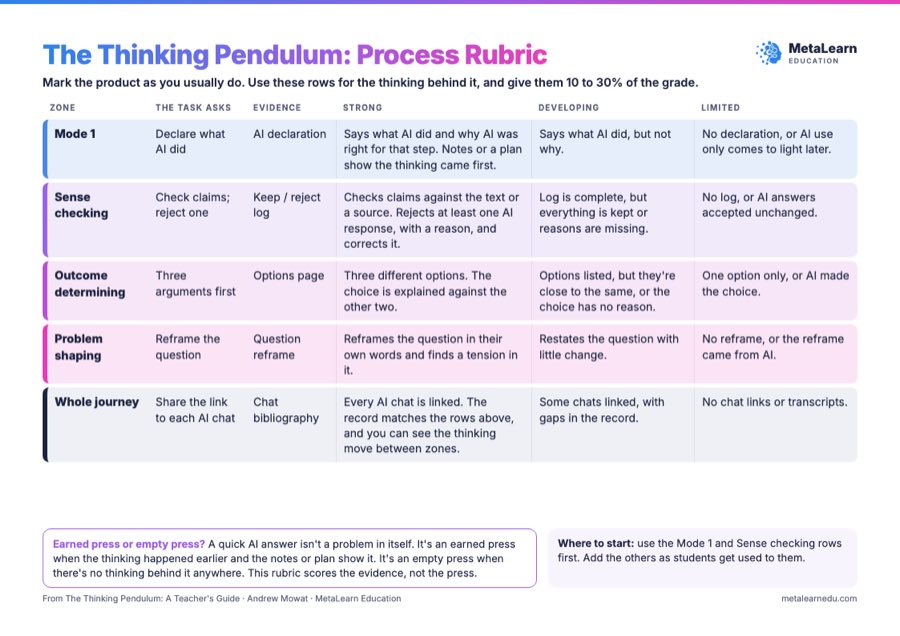
What you can mark is the process: what a student checked, what they rejected, what they chose and why. This rubric does that.
How it works
Keep marking the product the way you do now. Add these rows for the thinking behind it, and give them 10 to 30% of the grade. Each row matches a zone of the Thinking Pendulum, and each asks for a piece of evidence the student hands in alongside the work.